Sometimes, the first signs of leadership in a preschool classroom are easy to miss.
A child notices that the crayons haven't been put away and starts cleaning up. Another offers to help a friend who is struggling with a puzzle. Someone proudly volunteers to pass out materials before an activity begins.
None of these moments looks particularly extraordinary.
But to a young child, they can mean something important: I can help. I can make a difference. I can do something on my own.
When we think about raising confident leaders, we often imagine children who speak up, take charge, or naturally stand out in a group. But leadership in early childhood looks a little different.
It begins with responsibility, independence, empathy, and the confidence to take initiative.
At MyPlace Early Learning Center in Katy, TX, we believe these qualities develop through everyday experiences, not just special activities or structured lessons.
And some of the most meaningful opportunities for growth happen during the simplest parts of a child's day.
It Starts With "Let Me Do It!"
If you've spent time around a preschooler, you've probably heard those four familiar words.
"Let me do it!"
Maybe your child wants to pour their own water, put on their shoes, or carry something that seems a little too big for their hands.
For adults, it's often easier and faster to step in and help.
But for children, having the opportunity to try something independently is an important part of discovering what they're capable of.
When a child successfully completes a small task, they experience something beyond the satisfaction of getting it done.
They begin to trust their own abilities.
That confidence creates a foundation for taking on new challenges, making decisions, and becoming more comfortable with responsibility.
Of course, independence doesn't mean children should be expected to manage everything alone.
Sometimes they'll need encouragement. Sometimes they'll make a mess. And sometimes a task will take much longer than anyone expected.
That's part of the learning process.
At MyPlace, we recognize that giving children opportunities to participate in everyday routines helps them develop the confidence to keep trying.
Because before children can lead others, they need opportunities to believe in themselves.
Small Responsibilities Help Children Feel That They Matter
Imagine a classroom getting ready for an art activity.
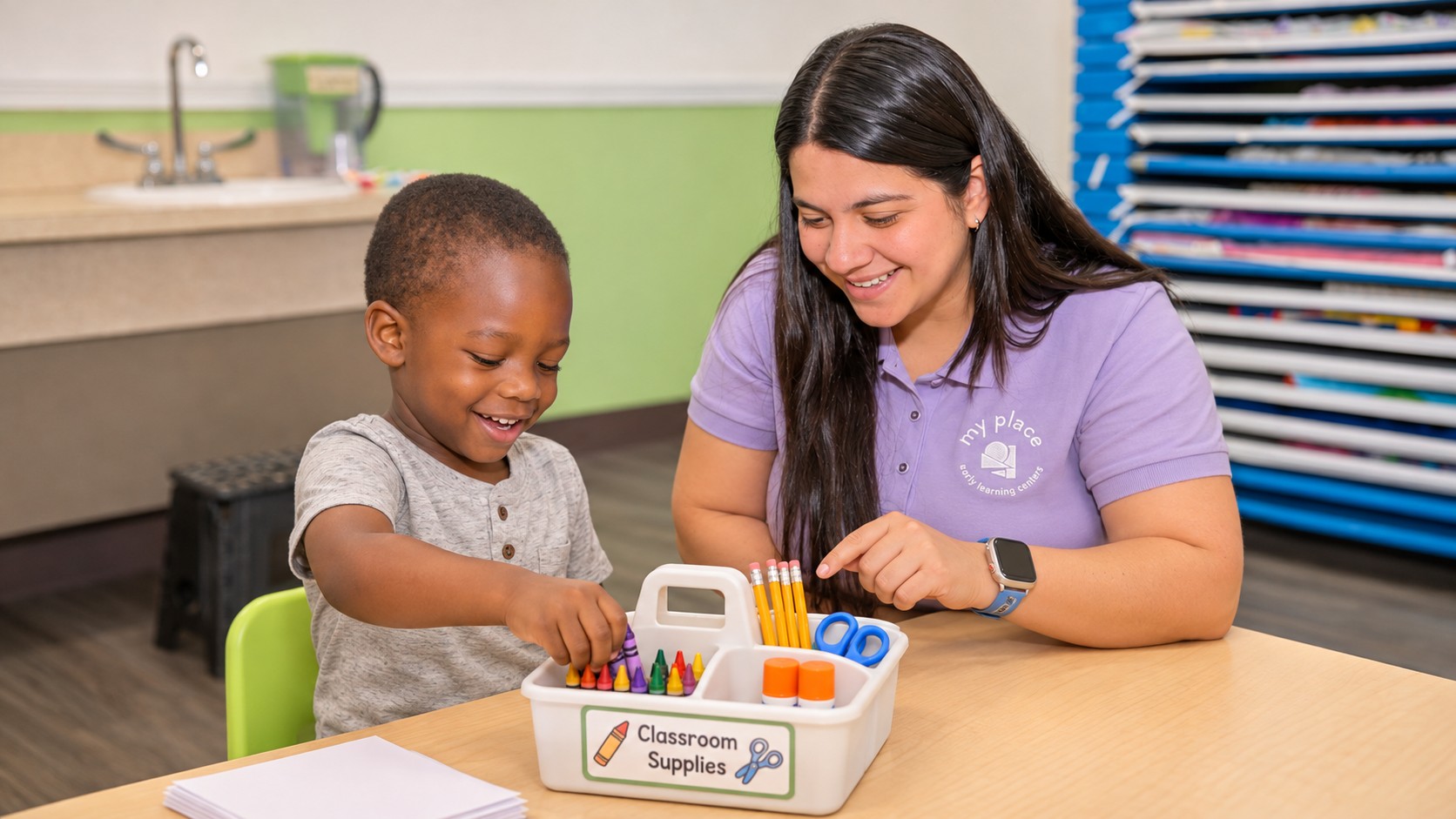
One child helps distribute the paper. Another makes sure the crayons are ready. Someone else helps return the supplies when everyone finishes.
These responsibilities may seem insignificant to an adult.
But for preschoolers, they're opportunities to feel included and useful.
When children are trusted with age-appropriate tasks, they begin to understand that their actions contribute to something bigger than themselves.
The classroom isn't simply a place where adults tell them what to do.
It's a community where they have a role to play.
And that sense of belonging can be incredibly meaningful.
A child who helps prepare materials learns that other people are counting on them. Someone who takes responsibility for cleaning up discovers that caring for a shared space is part of being a good friend.
These experiences introduce responsibility in a way that feels natural rather than overwhelming.
At MyPlace, our Pre-K routines include opportunities for children to participate as classroom helpers, encouraging them to take an active role in their day.
The goal isn't to assign more work to young children.
It's to help them discover the satisfaction of contributing.
Leadership Isn't Always About Being the Loudest
Some children love being the center of attention.
They're the first to volunteer, the first to answer a question, and the first to suggest a game.
Others prefer to observe before participating.
They might be quieter, more thoughtful, or more comfortable helping one friend at a time.
Both can become confident leaders.
One of the most important things children can learn about leadership is that it isn't simply about being in charge.
It's about listening, cooperating, showing kindness, and recognizing when someone else needs support.
Think about a child who notices a classmate sitting alone and invites them to join an activity.
Or someone who helps a younger friend understand how a game works.
These are meaningful expressions of leadership.
They show empathy, awareness, and the ability to act with consideration for others.
In early childhood, leadership doesn't need to come with a title.
Sometimes, it looks like making space for someone else.
Through group activities, cooperative play, and everyday friendships, preschoolers begin to understand that their choices can have a positive impact on the people around them.
And that's a lesson worth carrying far beyond the classroom.
Making Choices Builds Confidence and Decision-Making Skills
Every day presents young children with opportunities to make decisions.
Which activity would they like to explore?
What materials should they use to build something?
How can they solve a problem when their first idea doesn't work?
These choices might seem small, but they help children practice thinking independently.
When adults provide age-appropriate options, children learn to consider possibilities, express preferences, and make decisions within safe boundaries.
They also discover that different choices can lead to different outcomes.
Maybe they decide to build a tall tower with blocks, only to find that it keeps falling over.
Now they have another decision to make.
Should they change the base? Try different blocks? Ask a friend for an idea?
This is where independence, problem-solving, and leadership begin to connect.
At MyPlace, hands-on STEAM learning encourages children to explore possibilities, experiment with ideas, and participate actively in their learning experiences.
Teachers provide guidance and support while creating opportunities for children to think, question, and discover.
Because confidence doesn't come from always making the perfect decision.
It grows when children learn they're capable of making choices and working through what happens next.
Learning Responsibility Also Means Learning to Try Again
Not every attempt at independence goes smoothly.
A child might spill water while trying to pour their own drink.
They might forget a classroom responsibility or become frustrated when they can't complete a task.
These moments are a normal part of learning.
And how adults respond can make a meaningful difference.
When a child makes a mistake, the goal isn't to make them feel embarrassed or incapable.
It's to help them understand what happened and discover what they can try differently next time.
Maybe a teacher offers a smaller pitcher.
Maybe they break a difficult task into simpler steps.
Or perhaps they remind the child that it's okay to ask for help.
Through these experiences, children begin developing patience, perseverance, and a sense of personal responsibility.
They learn that mistakes don't define what they're capable of.
And they discover that responsibility isn't about doing everything perfectly.
It's about participating, learning, and being willing to try again.
These are important qualities for any future leader.
Confidence Grows When Children Feel Trusted
There's a difference between telling a child they're capable and giving them opportunities to experience it.
Both matter.
But when children are trusted with meaningful responsibilities, they begin to see themselves differently.
They discover that adults believe in their abilities.
That their contributions are valued.
And that they're becoming increasingly capable of handling new experiences.
For young children, this trust develops through consistent, supportive relationships.
Teachers who know a child's interests, personality, and developmental needs can recognize when they're ready for a new responsibility and when they might benefit from additional guidance.
At MyPlace, we believe every child deserves to feel known, encouraged, and supported.
Our teachers help children develop independence through everyday routines, hands-on activities, and opportunities to participate in classroom life.
Some children may eagerly volunteer for a new task.
Others may need time to observe, practice, and build confidence.
And that's okay.
Leadership isn't something children need to demonstrate on a schedule.
It's something that can grow naturally when they feel secure enough to explore their abilities.
Bringing Those Little Leadership Moments Home
The opportunities to build confidence and responsibility don't end when the school day is over.
Some of the best learning experiences happen during ordinary family routines.
Setting the table, sorting laundry, putting toys away, or helping care for a family pet can give preschoolers a sense of accomplishment.
The responsibility doesn't need to be complicated.
What matters is that the task feels meaningful and appropriate for the child's age and abilities.
A three-year-old might enjoy placing napkins on the table.
A four-year-old might help organize their backpack before school.
And a child who loves being creative could help choose materials for a family art project.
Sometimes, the most helpful thing parents can do is give their child a little extra time.
Time to figure something out.
Time to make a mistake.
Time to experience the pride of completing a task independently.
And when things don't go as planned, a little encouragement can go a long way.
Instead of focusing only on the finished result, notice the effort.
"You worked really hard on that."
"Thank you for helping our family."
"I love how you found a different way to solve that problem."
These simple conversations help children understand that their effort, ideas, and contributions matter.
And that's where confidence begins to take root.
How MyPlace Helps Little Leaders Grow Every Day
At MyPlace Early Learning Center, we believe early childhood education should prepare children for more than the next grade level.
It should help them develop the confidence, independence, and social skills they'll use throughout their lives.
That's why opportunities for responsibility are woven into the learning experience.
In our Preschool program, children develop communication, social-emotional skills, and independence through friendships, creative exploration, and hands-on activities.
As they grow, our Pre-K program introduces more structured classroom routines and age-appropriate responsibilities, helping children become comfortable participating in a learning community.
Our approach combines academic preparation with meaningful experiences that encourage children to think independently, work with others, and discover their strengths.
And because every child develops differently, our teachers provide the guidance and encouragement each child needs along the way.
Sometimes that means celebrating a child who confidently volunteers to help.
Other times, it's recognizing the quiet determination of someone who finally completes a task they've been practicing.
Both moments matter.
Because leadership isn't about expecting every child to become the same kind of person.
It's about helping each child discover the value of what they can contribute.
Today's Little Helpers, Tomorrow's Confident Leaders
When we imagine our children's futures, we naturally think about the big milestones.
Their first day of kindergarten.
Their first school presentation.
The friendships they'll build and the challenges they'll overcome.
But long before those moments arrive, something important is already happening.
Every time a child takes responsibility for a small task, they're learning to trust themselves.
Every time they help a friend, they're discovering the importance of kindness and cooperation.
And every time they try something new, they're building the confidence to face another challenge.
These small experiences may not look like leadership in the traditional sense.
But they're helping children develop the qualities that make leadership meaningful.
At MyPlace, we're proud to be part of that journey.
As a locally owned early learning center serving Katy families since 2009, we believe that every child deserves opportunities to feel capable, valued, and excited about what they can accomplish.
We'd love to show you how those little moments of growth come to life in our classrooms.
Visit our Woodcreek or Cinco Ranch campus, meet our teachers, and discover how MyPlace helps children grow into confident, independent learners.
Schedule Your Personal Tour Today or call us at (346) 307-2559.
MyPlace Early Learning Center. Rooted in Care. Inspired by Learning.