When parents visit a daycare or preschool, it's natural to notice the classrooms first.
Bright colors, beautiful learning spaces, organized shelves, and exciting activities can make a wonderful first impression. They help us imagine all the things our children might discover and enjoy.
And those details do matter.
But think about what happens after the tour is over, when your child walks through those doors for the first time without you.
The colorful walls won't be the ones comforting them if they're nervous. The educational toys won't notice when they're having a difficult morning. And even the most thoughtfully designed classroom can't replace the reassurance of someone who knows your child.
That's where teachers make the difference.
At MyPlace Early Learning Center in Katy, TX, we believe a great early learning experience begins with meaningful relationships. Because while a beautiful environment can inspire curiosity, it's the people inside it who help children feel safe, understood, and ready to grow.
A Classroom Can Be Beautiful. But a Relationship Makes It Feel Safe.
Imagine a little one arriving at daycare after a difficult morning.
Maybe they didn't sleep well. Maybe they're going through a phase of separation anxiety. Or maybe they simply need a little more reassurance than usual.
A teacher who knows that child recognizes the difference.
They might remember which activity helps them settle in, which familiar song brings a smile, or when it's better to offer a quiet moment before joining the group.
These small responses are part of building trust.
For young children, feeling safe isn't only about being in a secure building. It's also about knowing there are familiar adults who will respond when they need something.
And when children begin to feel secure in their relationships, they can become more comfortable exploring their surroundings, interacting with classmates, and trying new experiences.
At MyPlace, we want children to feel that they belong long before they're expected to master something new.
Because feeling comfortable in a classroom is often the first step toward feeling confident in it.
Children Learn Through Connection, Not Just Curriculum
A strong curriculum provides structure, direction, and opportunities for discovery.
But the way children experience that curriculum depends greatly on their interactions with teachers.
Think about a toddler pointing excitedly at something they've noticed outside.
A teacher could simply acknowledge it and move on.
Or they could pause, look at what the child sees, and begin a conversation.
"What did you find?"
"Why do you think that happened?"
"Should we take a closer look?"
Suddenly, a simple moment becomes an opportunity to develop language, curiosity, observation, and confidence.
These interactions are more important than they might appear.
Research from the Center on the Developing Child at Harvard University highlights how responsive, back-and-forth exchanges between young children and caring adults support early brain development and communication skills.
At MyPlace, our STEAM-focused approach encourages children to explore, ask questions, create, and solve problems through hands-on learning.
But meaningful learning isn't just about having interesting materials available.
It's about having teachers who notice a child's curiosity and know how to turn that moment into an opportunity to grow.
A great classroom gives children things to explore.
A great teacher helps them discover what those things can mean.
Being Known as an Individual Makes a Difference
No two children experience the world in exactly the same way.
One child might run toward a new activity without hesitation. Another may prefer to watch quietly before deciding to participate.
Some children love group activities. Others feel more confident exploring something one-on-one.
Neither approach is wrong.
They're simply different ways of learning and growing.
When teachers take the time to understand each child's personality, interests, strengths, and needs, they can offer encouragement that feels personal.
They begin to recognize when a child needs a little extra support and when they're ready for a new challenge.
They remember the things that make a child excited, the routines that help them feel comfortable, and the accomplishments that deserve celebrating.
At MyPlace, we believe children should never feel like just another name on a classroom roster.
We want them to feel seen.
Because there's something powerful about a child knowing that the adults around them understand who they are.
That sense of belonging helps create an environment where children feel more comfortable expressing themselves, building friendships, and discovering their abilities.
The Most Important Moments Aren't Always the Ones You Photograph
Some of the biggest moments in early childhood are easy to recognize.
The first time a child writes their name.
The day they learn to count to twenty.
The excitement of completing a project they've worked on all morning.
But other achievements happen much more quietly.
A child who usually struggles at drop-off walks into the classroom with a smile.
Someone who was afraid to try something new raises their hand to participate.
Two children who disagreed over a toy find a way to play together.
Or a little one who felt frustrated yesterday decides to try again today.
These moments might not look especially impressive in a photograph.
But they're meaningful signs of growth.
Teachers who build strong relationships with children are often the people best positioned to notice these changes.
They understand where a child started, how much progress they've made, and what kind of encouragement will help them continue.
At MyPlace, social-emotional development is an important part of our approach to early education.
We recognize that learning to manage feelings, communicate needs, build friendships, and develop independence matters just as much as academic progress.
And those skills grow through everyday experiences with adults who are paying attention.
Familiar Faces Help Children Build Trust Over Time
Relationships take time to develop.
For children, seeing familiar teachers day after day can create a sense of predictability and comfort.
They begin to understand what to expect, whom they can approach for help, and how the classroom works.
That consistency matters, especially during the early years when children are still learning how to navigate the world beyond home.
At MyPlace, we're fortunate to have a team of educators who have built lasting relationships with our families.
Our teachers represent more than 150 combined years at MyPlace, with an average tenure of four and a half years. Some have been part of our community for more than a decade.
For us, those numbers represent much more than experience.
They reflect the familiar greetings at morning drop-off, the relationships built with parents, and the opportunity to watch children grow through different stages of early childhood.
A child may move from an infant classroom to toddler care, then preschool and Pre-K, while continuing to be surrounded by familiar faces.
And for parents, knowing that their child is building relationships with people who care about their progress can make the everyday transition between home and school feel a little easier.
When Teachers and Parents Work Together, Children Benefit
A meaningful teacher-child relationship doesn't exist separately from the family.
It grows stronger when parents and educators communicate, share observations, and work together to understand a child's needs.
Maybe a parent mentions that their child hasn't been sleeping well.
Maybe a teacher notices a new interest in drawing or building.
Or perhaps both recognize that a child is becoming more independent and ready for additional responsibilities.
These conversations help create a fuller picture of how a child is developing.
And they remind children that the important adults in their lives are working together to support them.
At MyPlace, we believe parents are true partners in their child's learning journey.
Daily updates, open communication, and familiar relationships with our teachers help families stay connected to what happens throughout the day.
Because the relationship between home and school should feel like a partnership, not simply a drop-off and pickup arrangement.
What Should Parents Look for During a Daycare Tour?
Of course, classrooms still matter.
Children deserve clean, safe, engaging environments with age-appropriate materials and opportunities to play, learn, and explore.
But when you're visiting a daycare, try looking beyond the decorations and equipment.
Pay attention to what happens between the people in the room.
- Do teachers greet children warmly and by name?
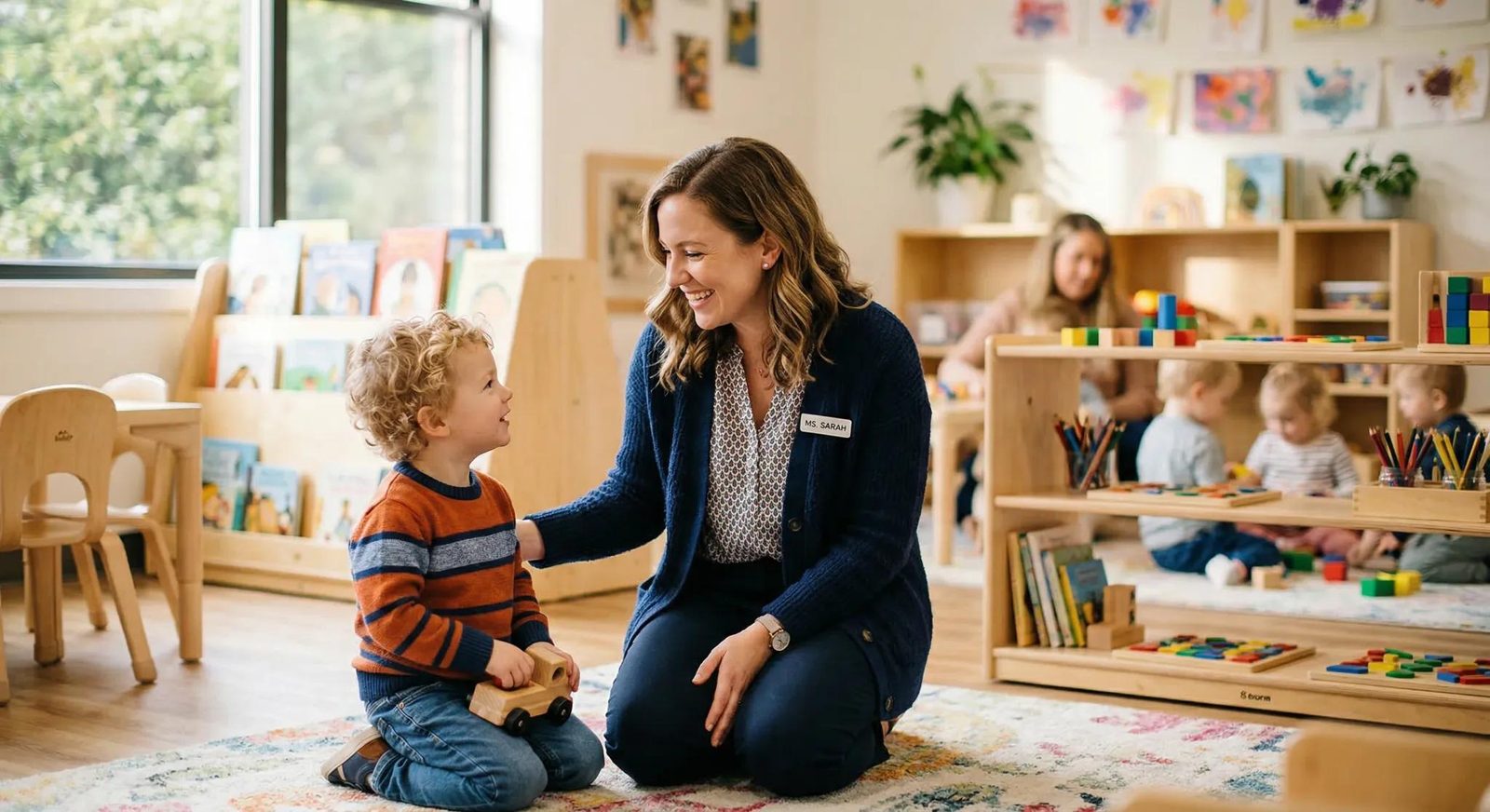
- Do they get down to a child's eye level when speaking with them?
- How do they respond when someone is upset or needs help?
- Do children seem comfortable approaching their teachers?
- Are teachers actively participating in activities and conversations?
You don't need a perfectly quiet classroom or children who never become frustrated.
Young children are learning, exploring, and developing new skills. Some moments will naturally be busy, emotional, or unpredictable.
What matters is how the adults respond.
A caring teacher won't prevent every difficult moment.
But they can help a child feel supported while learning how to navigate it.
And that tells you something important about the environment your child will experience every day.
At MyPlace, Our Teachers Are the Heart of What We Do
Since 2009, MyPlace Early Learning Center has been part of the Katy community, growing alongside the families who trust us with their children.
We're locally owned, with campuses in Woodcreek and Cinco Ranch, and we believe early education should feel personal.
Our classrooms provide engaging learning environments, hands-on STEAM activities, and opportunities for children to develop academically, socially, emotionally, and physically.
But behind every activity, milestone, and moment of discovery is a teacher helping make it possible.
Someone who encourages a child to try again.
Someone who notices when a little extra reassurance is needed.
Someone who celebrates the progress that might otherwise go unnoticed.
That's why our commitment to nurturing relationships is just as important as our commitment to educational quality.
You can meet our teachers and learn more about the people who help make MyPlace feel like home.
Because while our classrooms are designed to support learning, it's our teachers who bring that experience to life.
Come Meet the People Who Make MyPlace Feel Like Home
Choosing a daycare or preschool is about finding a place where your child can learn, explore, and build confidence.
But it's also about finding people you trust.
People who will get to know your child, support their development, and celebrate the small moments that mean so much.
Beautiful classrooms can make a wonderful first impression.
Meaningful relationships are what make that impression last.
At MyPlace, we'd love for you to experience the difference for yourself.
Visit our Woodcreek or Cinco Ranch campus, explore our classrooms, and meet the teachers who make our early learning community special.
See how care, connection, and learning come together in the moments that matter most.
Schedule Your Personal Tour Today or call us at (346) 307-2559.
MyPlace Early Learning Center. Rooted in Care. Inspired by Learning.