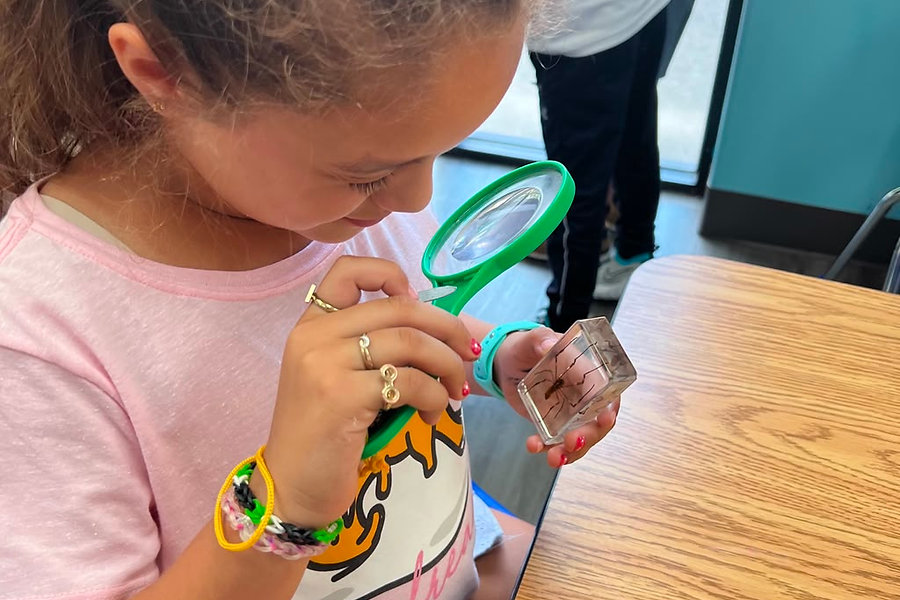
School-age children are naturally curious.
They want to know how things work, why something happens, what will happen if they try again and how they can make something better. They ask questions, test ideas, build, mix, stack, design, redesign and start over.
That curiosity is exactly what STEAM activities are designed to encourage.
For schoolers, STEAM does not have to look like advanced science lessons or complicated technology. It can be playful, creative and hands-on. It can happen when a child builds a marble run, designs a structure, creates a DIY toy, tests a project, observes a result, solves a problem with a friend or asks, “What happens if I try this another way?”
At My Place Early Learning Center, STEAM is part of a broader summer experience where schoolers are encouraged to explore, create and think through hands-on activities. Through the Creativity Factory Summer Camp, children participate in creative labs, maker projects, design-and-build challenges, art activities, collaborative projects and playful learning experiences that support curiosity, confidence and problem-solving.
What STEAM Means for Schoolers
STEAM stands for:
Science, Technology, Engineering, Arts and Math.
For school-age children, STEAM is not only about learning facts. It is about learning how to think, create, test and improve ideas.
Science may look like observing what happens during an experiment. Engineering may look like building and adjusting a structure. Math may look like comparing sizes, counting materials, measuring or noticing patterns. Technology may look like using tools or materials safely and intentionally. Art may look like designing, decorating, imagining and expressing ideas visually.
In a summer camp setting, STEAM should not feel like another school assignment. It should feel like exploration.
Children learn best when they can touch, try, move, create and ask questions. A strong STEAM activity gives them space to wonder, experiment and discover without pressure.
The goal is not to make summer feel academic. The goal is to help children develop habits that support future learning: curiosity, patience, creativity, focus, communication, teamwork and confidence.
Why Hands-On Learning Works So Well
Schoolers learn by doing.
When they build something, mix something, test something or create something, they are not just playing. They are making connections. They are seeing how ideas work in real life.
Hands-on learning helps children:
-
Understand cause and effect.
-
Practice trial and error.
-
Strengthen focus and patience.
-
Make decisions.
-
Think creatively.
-
Work through frustration.
-
Try again after something does not work.
-
Feel proud of what they create.
This is especially important during the summer. Children need a break from the regular school routine, but they still benefit from activities that keep their minds active and their creativity engaged.
STEAM gives children that balance. It feels fun and playful, but it also supports real learning.
For example, when a child builds a marble run, they may not realize they are exploring movement, direction, speed, design and problem-solving. To them, it simply feels exciting. But every adjustment they make teaches them something.
That is the power of hands-on learning.
How Building Activities Teach Problem-Solving
Building activities are one of the clearest ways children learn problem-solving.
When children create with cardboard, recycled materials, craft supplies, blocks or simple tools, they have to make decisions. They think about size, balance, shape, strength, design and function.
Sometimes the structure falls, sometimes the pieces do not fit, sometimes the idea in their head does not work the first time.
And that is where the learning happens.
Instead of giving up, children are encouraged to try again. They may make the base wider, choose a different material, ask a friend for help, test a new idea or redesign the whole project.
These experiences teach schoolers that problems can be solved step by step.
At MyPlace’s Summer Camp, activities such as cardboard creations, design-and-build challenges, marble runs, DIY toys, open maker labs, team build challenges and test-and-modify projects give children opportunities to build, experiment and improve their ideas. These types of activities are especially connected to the program’s Maker Week and broader creative learning structure.
For schoolers, this kind of problem-solving builds more than project skills. It builds confidence.
A child begins to think, “I can figure this out.”
That mindset is valuable far beyond summer camp.
How Science Activities Build Curiosity
Science for schoolers starts with observation and questions.
A science activity does not need to be complex to be meaningful. It can be as simple as mixing colors, exploring textures, observing nature prints, experimenting with movement, testing materials or watching how something changes when combined with something else.
During summer camp, science can be integrated naturally into creative projects. Color mixing connects science with art. Building challenges connect engineering with problem-solving. Cooking projects introduce measuring, sequence, texture and change. Nature printmaking encourages observation and attention to detail.
The important thing is to let children explore without making the experience feel too formal. When curiosity leads the activity, learning feels natural.
Why Art Makes STEAM More Creative
The “A” in STEAM stands for Arts, and it matters.
Art helps children bring imagination into problem-solving. It allows them to design, decorate, express and personalize what they create. Without art, hands-on projects can become only about whether something works. With art, children also think about what something means, how it looks, how it feels and how it communicates an idea.
For schoolers, this is powerful.
A child building a cardboard creation is not just constructing an object. They may be imagining a rocket ship, a castle, a robot, a bridge, a city, a stage or an animal habitat. When they add color, texture or details, they are using storytelling and design thinking.
Art also makes STEAM more inclusive. Some children may not immediately connect with building or science activities, but they may love painting, drawing, decorating, storytelling or design. Art gives them another way to participate.
In MyPlace’s Creativity Factory Summer program, themes such as Art Lab, Maker Week, Fashion & Design, Film & Photography, Creative Writing & Comics and Collaboration Creations show how creativity can connect with hands-on learning throughout the summer.
This is one of the reasons STEAM works so well for school-age children. It does not separate creativity from learning. It brings them together.
How Team Projects Build Communication
Many STEAM activities become even more meaningful when children work together.
Group projects help schoolers practice communication in a natural way. They learn to share materials, explain ideas, listen to friends, take turns, solve disagreements and celebrate progress together.
A team building activity might encourage children to ask:
Can I use that piece?What are you making?Should we try it this way?Can I help?What should we do next?
These small conversations support social confidence, teamwork and communication.
Team projects also teach children that different ideas can work together. One child may have an idea for the structure. Another may suggest a color. Another may notice that something is not balanced. Another may come up with a new way to test the project.
Together, they learn that collaboration can make a project stronger.
At MyPlace Early Learning Center Summer Camp program, group activities, peer feedback, collaborative creations and presentation practice are part of the creative experience. These moments help children build teamwork and confidence while giving them a chance to share what they made.
How My Place Uses STEAM During Summer Camp
At My Place Early Learning Center, STEAM is woven into the summer experience through creative, age-appropriate activities for schoolers.
The Creativity Factory Summer Camp gives children opportunities to build, test, redesign, observe, imagine and collaborate. Activities such as maker projects, art labs, design challenges, DIY toys, marble runs, creative journals, cooking projects, storytelling and group presentations help children learn through hands-on exploration.
Rather than treating STEAM as a separate subject, MyPlace Early Learning Center connects it with creativity and play.
Schoolers may explore STEAM through:
-
Building and construction activities.
-
Art and design projects.
-
Science-inspired experiments.
-
Cooking and sensory learning.
-
Group problem-solving.
-
Storytelling and presentation.
-
Collaborative creations.
-
Test-and-modify challenges.
This approach helps children see learning as something active, joyful and creative.
For parents in Katy, Woodcreek, Cinco Ranch and nearby communities, MyPlace’s Summer Camp offers more than childcare. It offers a structured summer experience where schoolers can continue growing while having fun.
Recommended Visuals for This Blog
To make this article stronger on the website and social media, the best visuals would come from real MPK activities connected to STEAM and creativity.
Section
Recommended Visual
Hero image
Schoolers building, painting or working together on a hands-on project
What STEAM means
Simple graphic showing Science, Technology, Engineering, Arts and Math
Building activities
Photos from Maker Week: cardboard creations, marble runs, DIY toys or design-and-build activities
Science and curiosity
Children mixing colors, observing materials or testing simple experiments
Art in STEAM
Photos from Art Lab, painting, mixed media or design projects
Team projects
Children collaborating on a group build or presentation
Final CTA
Smiling children with completed projects or a Creativity Factory themed image
These visuals would help parents immediately understand that STEAM at MPK is playful, age-appropriate and hands-on.
Final Thoughts
STEAM activities help children do what they naturally love to do: explore, build, ask questions and create.
For schoolers, the value is not in making the perfect project. The value is in the process. They learn to try, test, adjust, communicate and keep going.
That process builds curiosity. It builds problem-solving. It builds confidence. It builds habits that support future learning.
When STEAM is presented through play, creativity and hands-on discovery, children begin to see learning as something exciting and accessible.
That is what makes STEAM such a meaningful part of summer camp.
Looking for a summer camp in Katy, TX that combines creativity, hands-on learning and joyful play?
My Place Summer Camp gives schoolers opportunities to build, test, create, collaborate and discover through age-appropriate STEAM activities. Ask about Summer Camp availability or schedule a tour to learn more.